
How Weather-Protected Scaffolding Prevents Delays During Renovations
Renovating a home brings excitement and hope for better living, but it also brings uncertainty — especially when the unpredictable UK weather gets involved. Whether you are replacing a roof, converting a loft, repainting your exterior, or carrying out structural repairs, rain, wind, or cold can bring your entire project to a halt. That is where weather-protected scaffolding, often called a temporary roof scaffold, plays a crucial role. In this article I will explain how weather-protected scaffolding helps prevent delays during renovations using real world insight aligned with the values and service-standards of a scaffolding provider like JAX Scaffolding.
I draw on what makes a quality scaffolding service: safety, reliability, flexible design and respect for the home. I also reflect common challenges that homeowners and builders face when weather disrupts a build. If you are planning building or renovation work on a property, this guide will help you understand why a weather-protected scaffold is often not just helpful, but essential.
Why Weather Disruption Is a Major Threat to Home Renovations
Renovation work on houses often involves exposing internal parts, removing roof coverings, opening up walls, or leaving materials and fixtures temporarily unprotected. In the UK, where weather can be unpredictable and rain or wind can appear without warning, this exposure presents a real risk of damage. If a roof is stripped before being replaced, rain can soak internal ceilings or timber and plaster, causing water damage, mould or structural problems. Wind and cold can hamper work on external walls, painting or rendering. Even humidity or damp can interfere with plaster drying, painting or other finishing work.
When work stops because of weather, everything slows down. Contractors may not be able to proceed until the site is dry and safe. Materials may need replacing or drying out. Interior or exterior finishes may need redoing. All this adds delays and extra costs. For a homeowner, each delay is an inconvenience. For contractors, delays cascade: one interrupted job can push back subsequent tasks, potentially stretching a project by days or weeks.
Projects that span many trades — roofing, masonry, painting — are particularly vulnerable. For example, roofers may finish tiling only for interior decorators to come next; if there is a spell of rain or wind, both jobs may be postponed or compromised. Even scheduling becomes uncertain if weather is a wildcard. Planning becomes harder. Deadlines become stretching targets. Overall, weather disruption can turn a carefully planned renovation into a drawn-out ordeal.
Given these risks, many renovation projects stall or get significantly delayed because the site is exposed to weather. That is why taking proactive weather protection often makes the difference between a smooth, timely job and a prolonged, stressful renovation.
How Weather-Protected Scaffolding Works to Keep Your Project On Track
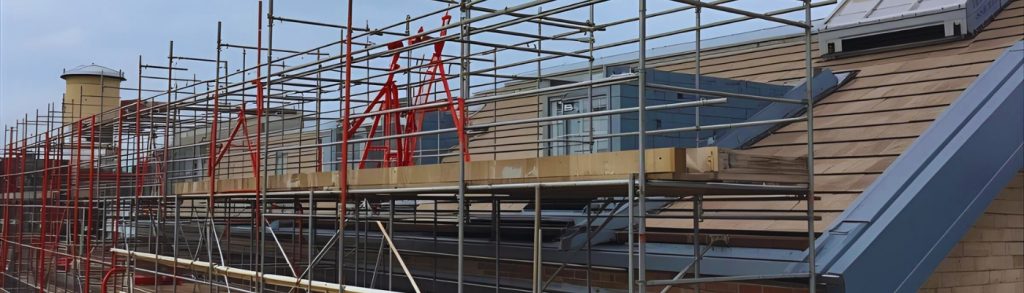
Weather-protected scaffolding — a scaffold with a temporary roof — is a system designed to shelter the renovation site from rain, wind, moisture and other elements. The basic idea is simple: build a scaffold frame around the building and top it with a durable, weather-proof cover such as corrugated metal sheeting or heavy-duty waterproofwrap. Sometimes the structure is enclosed on the sides too, creating a dry, controlled workspace beneath.
This method offers a dry, sheltered environment for work to continue regardless of weather. Roofing work, brick or masonry work, painting, plastering, woodwork, internal finishes — all can proceed under cover without worrying about rainstorms or damp air. Materials stored on site remain dry and usable. Tools and equipment are protected from the elements. Workers stay safer because they are not exposed to slippery surfaces or gusty wind.
Because weather protection removes a major unpredictable variable, scheduling becomes more reliable. Contractors can book work knowing that rain or wind is unlikely to cause extended downtime. Clients and builders can plan follow-on tasks — plastering, decorating, installations — without factoring in long weather delays. For long-running or multi-stage projects such as loft conversions, full roof replacements or structural repairs, this consistency is vital.
Weather-protected scaffold systems are typically modular. This means they can be designed to fit homes of many sizes and shapes — even complex layouts with bay windows, conservatories or narrow drives. A professional scaffolding company will inspect the property first, measure up and design a custom solution to ensure full coverage. That custom approach means the protection is effective rather than generic.
Beyond mere rain protection, quality temporary roofs also offer shelter from wind, dust, and other external factors. This can matter a lot when finishing work is happening inside — plaster, paint, flooring or internal fixtures — and you want to avoid contamination or damp seeping in. A controlled internal environment improves working conditions and ensures better quality of work.
For a home owner or contractor, weather-protected scaffolding turns a risky, weather-dependent build into a controllable, predictable process. It brings structure, clarity and certainty.
The Benefits of Weather-Protected Scaffolding for Different Types of Projects
Weather-protected scaffolding adds value to a wide range of renovation projects. For major works such as replacing a roof or performing a loft conversion, the benefits are obvious: the building is exposed for extended periods, and safeguarding the interior from rain or damp provides peace of mind and protects your investment.
For projects that involve external painting or rendering, weather-protected scaffolding means interiors and exteriors can be worked on simultaneously — even if rain appears. Builders or decorators can continue without waiting for perfect weather. That reduces downtime, helps keep the timelines tight, and improves project management.
Even smaller jobs such as gutter repairs, chimney work, or minor brickwork benefit from a temporary roof scaffold if there is a risk of rain or strong wind. While these tasks may be quick, unexpected weather can delay completion or damage materials. A scaffold with weather protection ensures such tasks remain efficient and timely.
For renovation projects that involve interior finishing — plastering, flooring, installing fixtures — weather-protected scaffolding helps by creating a stable, dry environment. You avoid moisture ingress that may compromise newly installed materials. That saves you from rework or replacement, and helps maintain quality of finish.
Another advantage is for long-term projects involving multiple trades — for example structural work, brickwork, roofing, followed by interior work and decorating. Weather-protected scaffolding reduces the risk of delays between phases. It allows trades to overlap or stay scheduled tightly. That makes logistics simpler, avoids idle periods and helps everyone stay on track.
Using a weather-protected scaffold can also offer financial sense in the long run. While there is an upfront cost, avoiding damage, rework, wasted materials, and labour downtime often pays off. It reduces risk, ensures smoother progression, and helps meet deadlines. For many homeowners and builders, sticking to schedule means better control over costs and fewer surprises.
What Professional Scaffolding Companies Bring to the Table
Installing weather-protected scaffolding is not something to improvise. It requires design, planning, compliance and proper installation to be safe and effective. A professional scaffolding provider brings expertise, experience and accountability.
A quality company will start with a site visit. They will consider the shape of your home, the size and pitch of your roof, access routes, neighbouring buildings, space around driveways or gardens, and any obstacles such as bay windows or conservatories. Based on that, they will design a scaffold layout that fully covers the working area while allowing access and respecting safety regulations.
The materials used matter. The roof covering needs to be durable and properly secured — not just a flimsy tarp. In many cases scaffolders use corrugated metal sheets or robust waterproof sheeting, sometimes with side coverings, to ensure full weather protection. The structure is braced, anchored, and inspected regularly to meet safety standards. This level of professionalism ensures that the scaffold remains stable under wind or rain.
Scaffolding providers who offer weather-protected scaffolds also often provide flexibility in hire duration and design. If your renovation scope changes, or work extends longer than planned, they can adapt the scaffold design or extend the hire period. That flexibility reduces disruption and ensures the protective cover remains until the project is complete.
From a homeowner’s perspective, professional scaffolders give peace of mind. You do not have to worry about stability, compliance, or safety. You know that materials are protected, people are safe, and the project can proceed reliably. That kind of trust, transparency, and attention to detail is exactly what homeowners need when taking on a big project.
When Weather Protected Scaffolding Makes the Most Sense
Not every renovation project requires a weather-protected scaffold. For minor exterior jobs expected to last a day or two in stable, dry weather, a simple scaffold may suffice. If roof, wall or interior work does not expose the home to moisture or elements, then keeping it simple makes sense.
However, when your project involves removing roof tiles or coverings, stripping walls, doing exterior painting, or structural repairs — especially at height — the risk of exposure rises sharply. In such cases, weather-protected scaffolding becomes a wise investment. It protects interiors, materials and work in progress from rain, wind or damp.
For jobs scheduled during times of unpredictable weather — autumn, winter or early spring — having a weatherproof scaffold is often what keeps the project moving. In these seasons delays due to rain or wind are more common. A temporary roof scaffold avoids these problems and gives you a controlled environment so your project moves forward.
When your renovation is multi-stage, with different trades working in sequence, weather-protected scaffolding helps keep the chain intact. Roofers, bricklayers, plasterers, decorators — all can work on schedule if the site is shielded from the elements. That continuity prevents costly scheduling gaps or delays between trades.
Finally, when you care about quality finishes — interior painting, plaster, newly installed flooring, fitted furniture — even a small leak or damp can cause big damage. A weather-protected scaffold gives the chance to complete those finishes without worrying about weather ruining your work.
Conclusion: Weather-Protected Scaffolding as a Smart Investment for Reliable Renovations
Renovations come with enough challenges without adding weather to the list. Weather-protected scaffolding helps take the weather out of the equation. It offers a safe, dry, stable environment where work can continue as planned. Materials stay protected. Workers remain safe. Project schedules hold up.
For roof work, loft conversions, exterior painting, structural repairs or multi-stage renovations, a weather-protected scaffold can make the difference between a smooth, timely renovation and a drawn-out, frustrating process. Even smaller jobs can benefit if weather might interfere. For long-running projects, the value grows even more because it supports multiple trades working in sequence.
A professional scaffolding provider offering custom designs, clear communication, flexible hire periods, and solid safety standards elevates the benefit further. With such a scaffold in place, you can plan with confidence, reduce risk, and focus on getting your renovation done properly.
If you are starting a home improvement project and wondering how to avoid weather delays while protecting your property, it is worth considering weather-protected scaffolding as part of your plan. It is not just scaffolding — it is insurance against unpredictable weather and a foundation for a smooth project from start to finish.