
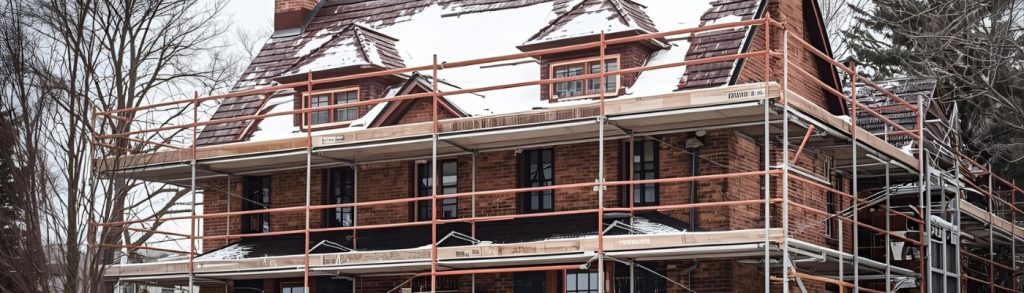
Why Temporary Roofs Are Essential for Winter Building Projects
Winter building projects bring their own unique challenges and risks. Cold weather, rain, snow, frost and shorter daylight hours can all affect the pace, safety, and success of any renovation or repair job. For many homeowners and builders, winter can feel like a season where progress slows, workers wait, and schedules slip. Yet there is a solution that helps avoid many of these problems: a well-designed temporary roof scaffold. In this article I explain why temporary roofs are especially important for building projects undertaken during winter. I draw on common industry understanding of weather-protected scaffolding and reflect the practical, customer-focused approach of a scaffolding provider such as JAX Scaffolding.
With insight into how winter weather impacts building work, and how a temporary roof can safeguard your project, you will be better informed when planning renovations that stretch into the cold season.
Understanding the Risk: Winter Weather and Building Work
Winter brings a range of weather challenges not commonly seen in summer. Rain and snow can arrive with little warning. Frost, freezing temperatures, damp and short days add complexity. When a building’s roof is removed, or walls are opened up, or external work is underway, the property becomes exposed. Without protection, rain can seep into walls, ceilings or interior spaces. Snow or frost can settle on exposed timber, masonry or plaster, damaging materials and delaying finishing work. Moisture can lead to damp, mould or rot before the work is even complete.
For tasks like roof replacement, loft conversions, exterior repainting, gutter repairs, chimney maintenance, or structural modifications, exposure during winter is highly risky. Rain can force work to pause. Materials left out may warp, plaster may fail to cure properly, paints and sealants may not adhere. Even if the immediate weather seems mild, the unpredictability of winter — sudden showers, freezing temperatures overnight — means that leaving the site exposed is a gamble.
Moreover, winter means shorter daylight hours and lower temperatures, which often slow down work naturally. If builders also need to wait for dry conditions before proceeding with key steps, the project timeline extends further. That can lead to added labour costs, increased material wastage, and general disruption to homeowners. For many projects winter becomes a period of delay rather than progress.
In addition, safety becomes a greater concern in winter. Snow, ice, or wet scaffolding platforms increase slip and fall risk. Cold, damp conditions can affect workers’ ability to perform safely and comfortably, which may trigger additional breaks or rescheduling. Weather delays and safety risks together threaten project quality, timing, and budget.
Given all these risks, any winter building project that involves exposure — especially roof removal or external work at height — needs serious planning around weather protection. That is why a robust temporary roof scaffold is more than just an optional extra: it is often essential.
How Temporary Roofs Provide Winter-Ready Protection and Keep Projects Moving
A temporary roof scaffold is essentially a weather-proof shelter built around your property while renovation or construction work is underway. The structure starts with a sturdy scaffold framework designed to fit the shape and size of your home. On top of that framework, a roof covering is installed — often made from durable weather-resistant materials such as corrugated sheet, waterproof sheeting or specialist wrap. In many cases, side coverings or enclosures are added so that the entire work area becomes shielded from rain, snow, wind and cold. This creates a dry, stable, and sheltered environment that allows work to continue regardless of the external weather.
For winter building projects this means several benefits. First, rain and snow no longer force a halt. Roofing work, brickwork, plastering, painting, carpentry or internal finishing can proceed under cover without fear of moisture ingress. Materials stored on site remain dry and ready to use. Timber, plasterboard, insulation, paint, and sealants are protected from damp or frost that could otherwise compromise them. This protection reduces the risk of wasted materials and need for rework.
Second, a temporary roof scaffold makes scheduling more reliable. Builders and tradespeople can plan tasks with confidence rather than waiting for favourable weather. That predictability helps avoid the delays common in winter projects. Electricians, plumbers, decorators and others can book their work knowing that the site conditions will be stable. As a result, the whole renovation workflow remains smoother and more efficient.
Third, worker safety improves substantially. Slippery surfaces, falling debris, icy platforms or sudden gusts of wind are major hazards on exposed sites. Under a temporary roof, walkways are dry, sheltered from wind, and safer to navigate even in bad weather. This reduces risk of accidents and supports compliance with relevant health and safety standards.
Finally, temporary roofs protect the wider property, not just the work area. Internal areas of the house remain shielded from the elements, protecting ceilings, walls, existing fixtures or newly installed features from water damage or damp. That is especially important if renovation includes interior work while external works are ongoing. Temporary roofs help ensure that finished or semi-finished work remains intact through winter weather.
Because temporary roof scaffolds are modular and customisable, they can be designed to suit a wide range of properties — from small terraced houses to larger detached homes, narrow driveways, bay windows or conservatories. A quality scaffolding company will assess the site carefully before installation, ensuring a tailored solution that covers all exposed areas effectively. That flexibility is part of why temporary roofs are a reliable choice for winter building.
Why Winter Projects Without Temporary Roofs Often Fail or Get Delayed
When builders or homeowners attempt winter renovation or roof replacement without proper weather protection, the risks quickly mount. Work may start under dry skies in early winter, but a sudden rainstorm or snowfall can bring progress to a standstill. Roofing tiles removed, walls open, materials piled — all exposed. Once rain hits, interior spaces may get damp, plasterwork may absorb moisture, timbers may swell, and previously dry materials may become unusable. This can lead to major rework or waiting until materials dry out — sometimes for days.
Even moderate cold can affect internal finishing work. Plaster and render often require stable conditions to cure properly. If surfaces are exposed to freezing temperatures or damp, curing can slow drastically or fail altogether. Paints or sealants applied outside may not bond correctly, leading to uneven finishes or peeling. This compromises the quality of the renovation and may require redoing large sections once the weather improves.
Another major issue is scheduling uncertainty. Tradespeople may not be able to guarantee when they can work. Instead of having a smooth sequence — scaffold up, roof replaced, internal work, painting, finishing — builders may need to pause and restart multiple times. That increases labour costs, stretches timelines, and often frustrates homeowners. In worst cases, long winter projects without protection end up dragging on for months rather than weeks.
Safety risks also grow. Wet or icy floors, frost on scaffolding or ladders, unstable conditions — all increase the chance of slips, trips or falls. That endangers workers and could lead to legal or insurance complications. Bedrooms, loft spaces or attic rooms exposed from above may also suffer internal damage, or insulation and wiring works may be compromised.
Given these risks, many winter building projects without weather protection end up more costly, more time-consuming, and lower quality than planned. In contrast, projects that start with a temporary roof scaffold tend to fare much better.
When You Should Strongly Consider a Temporary Roof for Winter Work
If your renovation project spans winter months and involves any of the following, you should strongly consider a temporary roof scaffold. Roof replacement or repair, loft conversions, external wall work, chimney or gutter repair, exterior painting or rendering, structural repairs, or any demolition or rebuilding work that exposes internal spaces or removes roof coverings — these are all high risk in winter.
Also when your project involves internal finishing concurrently with external work, a weatherproof scaffold offers dual benefit. It keeps external exposure out while protecting interior surfaces from damp or temperature swings. If you expect the work to extend for several weeks or months, a temporary roof scaffold becomes a sensible investment — especially if weather delays would hamper progress or cause costly rework.
Another situation is when you have sensitive materials or finishes in place: newly plastered walls, installed flooring, insulation, electrical works, or integrated fixtures. Moisture, damp, or frost can damage or ruin these. Under a temporary roof scaffold the finishing work stays safe.
Even for smaller jobs like gutter replacement, chimney pointing, minor roof tile work or external painting — if these coincide with the winter months or if weather forecast is uncertain — a temporary roof can make the difference between a quick job and a drawn-out ordeal.
Finally, if you value safety and compliance with regulations, a temporary roof scaffold enhances worker safety and eases adherence to legal health and safety obligations. For reputable scaffolding providers, weather-proof scaffolding is part of delivering a professional, safe service especially in challenging weather seasons.
The Value of Working with a Professional Scaffolding Company
Using a temporary roof scaffold effectively requires careful design, correct materials, safe installation and appropriate safety checks. It is not a project to improvise. That is why working with an experienced, reputable scaffolding company matters.
A professional company understands how to assess your property’s layout and potential obstacles such as narrow driveways, bay windows, conservatories or neighbouring buildings. They design the scaffold so that the temporary roof provides full coverage without obstructing access or interfering with essential routes. They choose appropriate weather-resistant materials for the roof covering and side sheeting to ensure durability through winter storms, rain, wind or snow. They install the scaffold securely to meet safety standards. And they carry liability insurance and follow relevant safety regulations.
Moreover a good scaffolding provider offers flexibility. If your work extends beyond the expected timeframe because of project changes or extra trades, they can adapt the scaffold or extend the hire period. They also offer prompt installation and removal, helping you minimise downtime or excess costs. From site visit and quote to installation and dismantling, a professional team makes the process smooth and manageable.
For homeowners, working with a pro means not having to worry about structural stability, compliance, safety or material damage. It also means transparency in pricing and communication — important when you are managing a renovation during unpredictable winter months.
Final Thoughts: Why Temporary Roofs Are Essential for Winter Building Projects
Winter renovation and building projects carry risk. Without proper protection, rain, snow, frost, wind and damp can cause delays, damage materials, compromise finishes, increase costs and endanger safety. The unpredictable nature of winter weather makes this risk even greater.
Temporary roof scaffolding offers a reliable solution. It creates a weather-proof shelter over your building site, allowing work to proceed safely and steadily throughout the winter. It protects materials, interior and exterior surfaces, provides a stable working environment, safeguards safety, and ensures scheduling remains predictable.
Whether you are replacing a roof, carrying out a loft conversion, repainting your exterior, fixing gutters, or doing structural repairs — if the work spans winter months, a temporary roof scaffold should be part of your plan. The additional cost is often offset by savings in time, rework, wasted materials, and stress.
Working with a professional scaffolding company ensures the scaffold and roof are designed and installed properly, conform to safety standards, and meet the specific needs of your property. That level of care and expertise makes all the difference when the weather turns.
If you are planning a winter building project, think ahead. Consider whether your site will be exposed. Consider the risks. And if there is any chance of weather disruption, invest in a temporary roof scaffold. It is not just scaffolding. It is protection, certainty and peace of mind.