
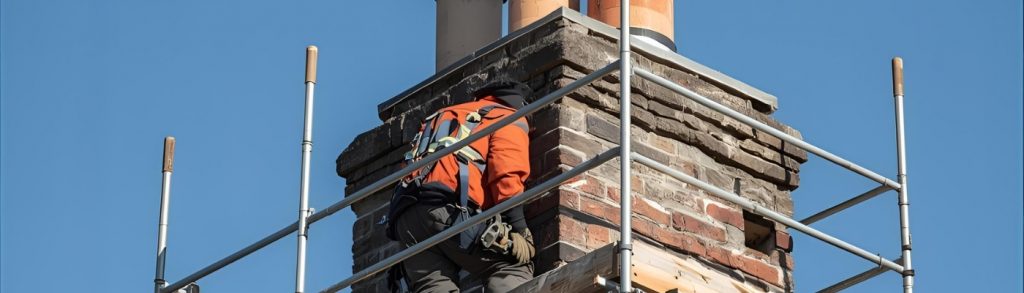
Why Chimney Repointing Requires Secure Scaffold Access
Chimney repointing is one of those household maintenance tasks that often gets postponed until cracks, crumbling mortar or water staining start to show. Many homeowners assume that repointing a chimney is a quick job that can be done from a ladder or by leaning out from the roof. In reality, chimney repointing is detailed, physical, high level work that demands careful access, controlled movement, steady foot support and full visibility of every joint. This is why secure scaffold access plays such an important role in ensuring safety, accuracy and long lasting results.
The chimney on a home sits in one of the most exposed parts of the property. It has weather hitting it from all directions, constant temperature changes, the movement of the building around it and the natural erosion of mortar over time. Because of this, chimneys need repointing far more often than many realise. Yet the height and position of a chimney make any maintenance risky without a stable platform. Secure scaffold access is the key ingredient that turns a risky job into a safe, controlled and professional repair.
Repointing a chimney is not just about filling gaps. It involves grinding or raking out old mortar, cleaning brick joints, inspecting structural movement, protecting roof tiles, reaching all sides of the chimney and working with both hands free. None of these tasks can be carried out properly or safely without reliable, professionally installed scaffolding. When residential scaffolding is provided by a specialist team that focuses on safe practices, clear communication and customer care, the entire process becomes smoother and more predictable for the homeowner.
This blog explores exactly why secure scaffold access is essential for chimney repointing, what role permits and safety play, how customer experience shapes the outcome and what homeowners should understand before any chimney work begins. It presents the topic with clear explanations, real world logic and an educational tone to support long term home maintenance knowledge.
Why Chimney Repointing Cannot Be Safely Completed Without Secure Access
Chimneys may appear simple, but they are complex structures with multiple stress points that weaken over time. Mortar degradation is one of the earliest signs that a chimney needs attention. When gaps appear between bricks, water begins seeping in. If temperatures drop, that moisture can freeze and expand, pushing mortar out and loosening bricks further. Over time this creates unstable sections that can fall, especially during storms or strong winds. Addressing these issues early with repointing is a sensible and cost effective form of prevention.
However reaching a chimney safely is another matter entirely. A chimney is rarely positioned in an easily accessible location. It is usually located near the ridge of a roof, often above a sloped surface that offers no flat area to stand on. The height of a chimney can vary widely, with some extending a metre or more above the roofline. These factors make ladders unsuitable for safe repointing. Ladders offer limited stability, require constant repositioning, and demand that the worker maintains balance with one hand while attempting delicate work with the other.
Secure scaffold access eliminates these problems by creating a flat, stable, fully guarded platform at the correct height. This allows workers to move freely, set tools down safely, and apply mortar with precision. The use of secure scaffolding also reduces pressure on the roof. Without scaffold access, workers often end up standing on tiles or leaning against them. Roof tiles are not designed to take direct pressure from tools or boots. They can crack or shift, which then leads to further water ingress into the home. Scaffold access protects the roof from these risks.
There is also the factor of visibility. Repointing requires full inspection of all sides of the chimney. When using a ladder or attempting roof access alone, certain areas become impossible to see or reach safely. A scaffold platform lets workers step back slightly from the chimney, examine its condition properly, measure mortar depth, and carry out the work evenly on all sides. This is one of the main reasons why repointing done without secure scaffold access often fails sooner, because certain joints are not properly repaired.
Chimney repointing also involves carrying tools, buckets of mortar, grinders, raking equipment and cleaning brushes. None of these items are safely handled on ladders. Scaffolding allows equipment to be placed securely, preventing accidental drops. Even small falling objects can cause damage below, especially if the chimney is positioned above a driveway, garden furniture or pathways. Secure scaffold access prevents these hazards by providing toe boards, guardrails and dedicated work zones that protect the property and the people around it.
Overall, the reason chimney repointing requires secure scaffold access is simple. Without it, the work becomes unsafe, incomplete, rushed and vulnerable to failure. A stable platform ensures that every joint is repaired correctly and that the property remains protected throughout.
The Importance of Permits, Planning and Legal Requirements for Scaffold Installation
For homeowners, one of the most confusing parts of scaffolding is knowing whether a permit is required before anything can be installed. Chimney repointing often demands scaffolding to be erected along rooflines or on the sides of buildings that border public spaces. In many areas, if scaffolding touches or overhangs a pavement or road, a permit is required from the local council. This ensures the scaffold meets local safety expectations and protects pedestrians and traffic.
A professional residential scaffolding company manages this process clearly. They assess the property during the initial site visit, discuss placement options and determine whether the scaffold will extend onto public land. If a permit is needed, they complete the application on your behalf. This saves homeowners from dealing with forms, compliance rules or waiting periods. It also provides reassurance that everything is being done legally and safely.
Permits also influence how the scaffold is constructed. When scaffolding occupies public space, additional protective measures are often required. These can include barriers at ground level, signage, lighting for visibility at night or extra support bracing. Although these features may seem minor, they are vital for public protection and can be the difference between safe access and a dangerous setup.
Planning is equally important. Chimney repointing requires a scaffold design that matches the height, location and condition of the chimney. Scaffolding must be securely anchored, correctly balanced and built to withstand the weight of workers, tools and materials. Professional scaffold design considers ground conditions, weather possibilities, property layout, neighbour boundaries, garden obstacles, roof angles and more. These elements cannot be guessed, which is why experienced scaffolding specialists always conduct site visits and offer tailored plans.
After installation comes inspection. Proper scaffold safety requires regular checks throughout the duration of the chimney repointing project. These inspections ensure that the scaffold remains stable despite wind, rain or alterations made during the work. A dedicated scaffolding team carries out these inspections and records them for compliance. This is another layer of protection for both the homeowner and the workers.
The planning process also involves managing customer expectations. Clear communication helps homeowners understand where the scaffold will stand, how long it will remain and how access to doors, driveways or garden areas may be affected. When a company values customer experience, they make sure disruption is minimal. They respect the property, protect landscaping, avoid unnecessary obstacles and always prioritise tidy work. This professional approach removes stress and shows the homeowner that their safety and comfort are being taken seriously.
Overall, permits and planning are essential parts of secure scaffold access. They ensure legal compliance, proper design, accurate installation and safe ongoing use throughout the chimney repointing process.
How Secure Scaffolding Improves the Quality and Longevity of Chimney Repointing
Chimney repointing is only effective when the work is carried out properly. Mortar joints must be prepared carefully and filled with the correct consistency. Bricks must be examined for damage. Mortar must bond correctly and be smoothed to match the original finish. Anything less than meticulous technique can lead to premature failure.
Secure scaffold access plays a major role in helping workers achieve high quality repointing. When standing on a stable platform with both hands free, workers can remove old mortar accurately without chipping surrounding bricks. They can apply new mortar confidently and shape the joints correctly. They can clean excessive mortar before it dries, preventing messy finishes. They can take the time to look at the brickwork as a whole and make informed decisions about what needs deeper repair.
When chimney repointing is done from a ladder, quality suffers. Mortar may be forced into gaps unevenly. Workers may skip difficult sections that cannot be reached safely. Cleaning may be rushed because the worker cannot hold tools properly. Mortar may be spread thinly or too thickly in places. All of these small issues accumulate and eventually affect the durability of the chimney.
Secure scaffold access also allows for deeper inspection. Chimney problems often extend beyond the mortar. There may be cracks, loose bricks, deteriorating flaunching at the top of the stack, poor lead flashing around the base or gaps that allow water to penetrate the roof space. Workers can only identify these issues from a position that allows full visibility. When a chimney is fully accessible through scaffolding, hidden defects can be discovered and addressed before they become expensive problems later.
High quality repointing also relies on environmental control. Mortar must be applied during stable weather conditions and must be protected from extreme temperature changes while drying. Scaffolding allows protective sheeting or temporary covers to be used if needed, without interfering with the work. It also reduces the risk of debris falling and causing accidental damage to gardens, conservatories or car parking areas.
A properly scaffolded chimney repointing job usually lasts far longer than a ladder based repair. Secure scaffold access gives workers the time and stability needed to apply mortar that cures cleanly, bonds tightly and provides long lasting protection. This prevents moisture penetration, structural movement and future erosion. High quality repointing is an investment in the lifespan and safety of your chimney and secure scaffold access is essential in achieving this standard.
The Role of Customer Experience in Safe and Effective Chimney Repointing
Home maintenance can be stressful. Having scaffolding around your property, workers on your roof and materials being moved in and out can feel intrusive. A professional residential scaffolding company understands this and works hard to make the experience as smooth as possible. They communicate clearly, keep the environment tidy and make sure you always know what to expect.
Customer experience begins with the first enquiry. A good scaffolding provider responds quickly, listens carefully to your needs and arranges a site visit without delay. During that visit they explain how the scaffold will be designed, where it will be placed and how it will support the chimney repointing work. They discuss timing, access, safety and possible permit requirements. This transparency builds trust from the start.
Installation day is another important moment for customer experience. A reliable team arrives on time and respects the property. They deploy protective measures where needed and ensure no unnecessary damage occurs to gardens or exterior features. They assemble the scaffold calmly, professionally and without disrupting the household. If neighbours need to be informed or access arrangements need to be discussed, the team handles those conversations politely and respectfully.
Once the scaffold is in place, good communication continues. The homeowner is updated on inspection schedules, safe access information and timing for dismantling. Questions are answered clearly. Adjustments, if required, are handled professionally. The scaffolding team remains available throughout the chimney repointing project to support the trades using the scaffold and to manage any safety concerns that arise.
Dismantling the scaffold is handled with the same level of care. A reliable scaffolding company leaves the area clean, removes all materials promptly and restores the property to normal use. By focusing on customer experience from start to finish, the scaffolding provider not only ensures a safe environment but also reduces the stress associated with home repairs.
Customer experience also affects safety. When communication is clear, misunderstandings are reduced. When timing is respected, homeowners can plan around access needs. When the property is kept tidy, accidents are less likely. When the customer feels informed and supported, the entire chimney repointing project becomes more successful.
A strong customer experience is not an optional extra in the scaffolding industry. It is part of what makes the installation safe, professional and trustworthy. Secure scaffold access combined with considerate service ensures that chimney repointing is completed to a high standard without unnecessary disruption or risk.
Why Choosing Experienced Residential Scaffolders Matters for Chimney Repointing
Chimney repointing requires more than just putting up scaffold poles. It requires experience working in residential settings, understanding tight access areas, managing safety around gardens and homes and ensuring that the installation does not interfere with daily life more than necessary. This is where an experienced residential scaffolding provider makes all the difference.
Specialists in residential scaffolding understand that every home is unique. They know how to navigate sloped gardens, driveways, narrow passageways and terraced housing. They can design scaffold structures that provide safe access without blocking doors, windows or important pathways. They work with the chimney, roof and property layout in mind rather than applying a one size fits all approach.
Experienced scaffolders also understand the nature of chimney repointing. They know where workers will need the most support, how high the platform should be, what type of guardrails are necessary and how to create optimum working conditions. Their work helps the repointing team carry out repairs smoothly and confidently. This not only improves safety but also enhances the quality of the final result.
Insurance and qualifications also matter. A responsible scaffolding company carries full insurance coverage that protects the homeowner in the event of accidental damage. They use trained and qualified operatives who understand how to erect, inspect and dismantle scaffold structures safely. They follow industry standards and maintain compliance at every stage of the project.
Another advantage of experienced scaffolders is their respect for time. They understand that chimney repointing often forms part of a larger project or schedule. They arrive when promised, complete the work efficiently and dismantle the scaffold when it is no longer needed. This helps the homeowner plan effectively and reduces delays.
Finally, experienced residential scaffolders prioritise tidy work. They know that a home environment requires more care than a commercial site. They protect surfaces, avoid unnecessary mess, communicate courteously and leave no trace when the scaffold is removed. This level of professionalism directly benefits the homeowner and contributes to a smooth project experience.
Choosing experienced scaffolders ensures that every part of the chimney repointing project stands on a stable foundation. Secure scaffold access is not just a platform for work. It is an essential component of safety, compliance, quality and customer satisfaction.
Final Thoughts on Why Chimney Repointing Requires Secure Scaffold Access
Chimney repointing is a vital part of home maintenance that protects your property from moisture, structural movement and weather damage. It keeps the chimney stable, prolongs its lifespan and preserves the safety of the home. But none of this can be achieved safely or effectively without secure scaffold access.
Secure scaffolding provides the stable working platform needed for high quality mortar repairs. It reduces the risk of falls, protects roof tiles, allows access to every side of the chimney and ensures that workers can carry out the job with full control. It also contributes to better long term results by giving workers the visibility required to inspect and repair hidden issues.
Permits and planning are vital for proper scaffold installation. They ensure legal compliance and safety around the home and public areas. Customer experience plays an equally important role, making the project smooth and stress free for homeowners.
Chimney repointing is not a job to rush or attempt without proper preparation. When secure scaffold access is provided by experienced residential specialists, the entire process becomes safer, more reliable and more efficient. Your property remains protected and your chimney receives the careful attention it deserves.