
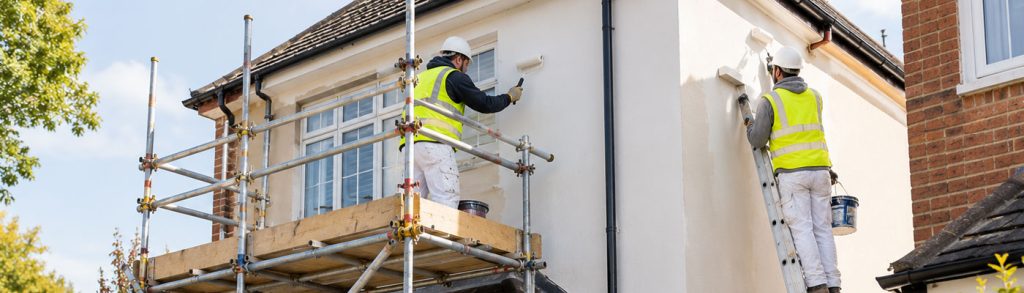
Scaffolding vs Ladders for Painting a House
Painting the outside of a house can make a big difference to how a property looks, but reaching upper walls safely is often harder than it first appears. This is where the choice between scaffolding and ladders becomes important. For a small, low-level job, a ladder may seem like the quickest answer. For larger exterior painting work, scaffolding can provide a more stable working area and make it easier to reach the full height of the property.
So, which is better: scaffolding or ladders for painting a house? The answer depends on the height of the building, the amount of painting involved, the ground conditions, the time needed and how much movement the painter needs while working. Understanding these points can help you choose an access method that suits the job rather than simply choosing the cheapest option.
Scaffolding vs Ladders for Exterior House Painting
A ladder can be useful for short tasks where the work area is low and conditions are suitable. It may work well for touching up a small section, reaching a window frame or carrying out another brief task. The problem starts when exterior painting involves several upper-storey walls or long periods of work at height.
Painting is not the same as reaching one small area. A decorator may need to hold a brush, roller or paint container while moving along a wall. They may also need to work around windows, under eaves and across different sections of the property. A ladder gives access to one area at a time, so it may need to be moved repeatedly. That can make a larger painting project slower and more awkward.
Scaffolding creates a working platform that can extend along the side of a house. Instead of repeatedly climbing down and moving a ladder, a painter can work across a larger section from a stable platform. This can make it easier to prepare surfaces, apply paint evenly and reach awkward areas. It also gives the decorator more room for tools and materials.
Safety is another important factor. Work at height needs careful planning, and risks can increase when someone is working for long periods, reaching away from their position or using tools while standing on a ladder. Scaffolding is designed to create a more controlled work area, with working platforms and edge protection forming part of the access system.
Weather matters too. Rain, wind and slippery surfaces can affect exterior work. A proper assessment should consider the building, access points, ground conditions and the work that needs to be completed.
When Is Scaffolding Better Than a Ladder for Painting?
The scale of the job is one of the clearest factors. If you are painting a small area close to ground level, a ladder may be practical. If you are painting an entire exterior, working around several windows or covering upper-storey walls, scaffolding is often the more suitable choice.
The height of the property also matters. Reaching a first-floor area is different from working around a two or three-storey house. As working height increases, safe access becomes more important. A ladder that looks manageable from the ground may feel very different once you are carrying equipment and trying to reach across a wall.
The length of the job should also be considered. A painter who needs access for several hours or days may benefit from having a stable platform that remains in place. With a ladder, the access point changes as the work moves around the building. Repeated movement can interrupt the job and make the process less efficient.
Ground conditions are another concern. Gardens, sloping ground, paths, conservatories and other obstacles can make ladder placement difficult. A professional scaffolding assessment can identify where access is needed and how the structure can be positioned around the property.
There is also the question of finish. Exterior painting often involves cleaning, scraping, filling and sanding before paint is applied. A stable working platform can give the decorator more room to prepare surfaces properly. Better access can therefore support a better finish, not simply make the job easier.
For homeowners in London, residential scaffolding is commonly used for painting and decorating alongside roofing, guttering, chimney work, loft conversions and other home improvements. JAX Scaffolding provides residential scaffold hire across London and nearby areas, including exterior painting and decorating projects. Its service also focuses on clear communication and careful work around residential properties.
Is Scaffolding More Expensive Than Using Ladders?
A ladder may appear cheaper because there is less equipment involved. However, access should not be judged on hire cost alone. The time needed to complete the work, how often equipment must be moved and the difficulty of reaching certain areas can all affect the overall project.
Scaffolding usually involves planning, installation and removal, so it can cost more than a ladder for a small job. That does not automatically make it poor value. If the project involves painting most of the house, better access may help the work progress more efficiently. It may also allow several tasks to be completed while the scaffold is in place.
JAX Scaffolding explains that its residential scaffold hire can support projects ranging from short jobs to work lasting several weeks, depending on the project. This can be useful when painting schedules change or other work takes longer than expected.
Choosing the Right Access for Your Painting Project
The right choice comes down to the building and the work, not simply whether scaffolding or a ladder is generally better. A ladder can have a place in short, low-level tasks where conditions are suitable. Scaffolding becomes more useful when the job involves greater height, wider areas, longer working periods or repeated movement around the outside of the house.
For homeowners unsure about what is needed, a site assessment is often a useful starting point. A scaffolding company can look at the property, understand the work and explain what type of access would be appropriate. JAX Scaffolding works with homeowners and contractors across London and surrounding areas, providing residential scaffolding for painting, roofing, loft conversions and other external work.
The main lesson is simple: do not choose access based only on what seems easiest from the ground. Think about how the work will actually be carried out once you are several metres above it. Good access should allow the job to be completed safely, comfortably and with enough room to work properly.
Frequently Asked Questions
Is scaffolding safer than a ladder for painting a house?
For many larger exterior painting projects, scaffolding can provide a more stable and spacious working platform than a ladder. However, safety depends on correct design, erection, inspection and use. The building, height, ground conditions and weather should all be considered before work begins.
Do I need scaffolding to paint the outside of my house?
Not every exterior painting job needs scaffolding. A small low-level repair may be manageable with suitable access equipment. If the work covers upper-storey walls, several sides of the property or difficult-to-reach areas, professional scaffolding may be a more appropriate option.
How long does scaffolding stay up for house painting?
There is no single fixed period. It depends on the size of the property, the amount of preparation and painting required, and whether other work is taking place at the same time. A hire period can be arranged around the project, with changes discussed if the work takes longer.
Is scaffolding worth it for painting a house?
For a full exterior repaint, scaffolding can be worthwhile because it gives painters access to a wider area from a stable platform. It can also make surface preparation and detailed painting easier. Whether it represents good value depends on the size, height and complexity of the project.
Can painters use the same scaffolding as roofers?
Often, scaffolding can support more than one type of work, provided the structure has been planned and set up for the tasks involved. Roof repairs, gutter work, exterior painting and other jobs may all need access around the same property. The required setup should be agreed before work starts.