
What Happens When Scaffolding Hire Ends?
Hiring scaffolding is often one of the first steps in a roofing repair, loft conversion, repainting job, repointing project or home extension. But once the building work is nearly finished, many homeowners ask the same question: what happens next? Understanding the end of a scaffolding hire can help you avoid delays, extra hire time and confusion over when the structure should come down.
The end of the hire period is not simply a case of someone arriving and taking the tubes away. The work on the property needs to be ready, the scaffold should no longer be needed, and the removal needs to be planned so it can be carried out safely. For homeowners, knowing how this stage works also makes it easier to speak with builders and scaffolders before the final day.
When Should Scaffolding Be Removed?
Scaffolding should normally stay in place for as long as it is needed for the work it was designed to support. This could be a few days for a small repair or several weeks for roofing, rendering, brickwork, painting or a larger renovation. The important point is that the end date should match the progress of the project rather than being based only on an original estimate.
Before removal, the main contractor or homeowner should check that all work requiring scaffold access has been completed. This may include finishing roof repairs, checking gutters, completing external painting, carrying out final pointing or removing equipment and materials that were being used from the platforms. Taking the scaffold down too early can create a problem if a tradesperson later needs safe access to an upper section of the property.
Communication matters at this stage. If the building work is finished earlier than expected, the scaffolding company can arrange removal sooner. If the project has been delayed by weather, material shortages or changes to the work, the hire period may need to be extended. It is better to discuss this before the agreed removal date rather than allowing the hire to continue without a clear plan.
At JAX Scaffolding, the hire service covers delivery, erection, dismantling and removal, with flexible hire periods for different domestic and commercial projects. The company also states that customers can stay in touch during the project if extra time or changes are needed. This approach is useful because the scaffold is treated as part of the wider project rather than as a structure that simply disappears on a fixed date.
What Happens During Scaffolding Removal?
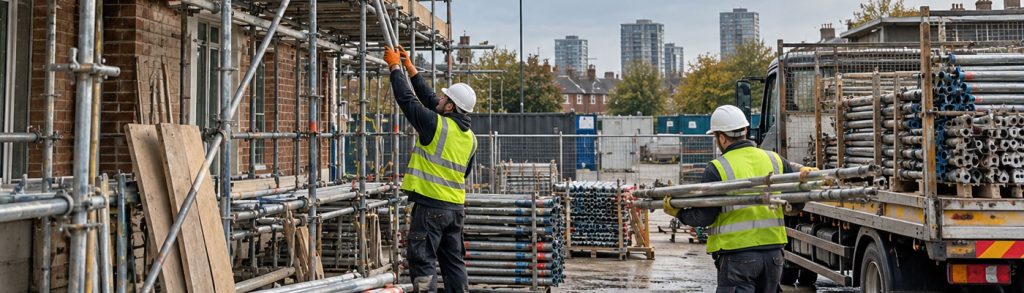
Once the project is ready, the scaffold is dismantled in a controlled way. The exact method depends on the structure, the property, access around the building and any restrictions at the site. A professional scaffolding team will work through the structure carefully rather than treating removal as a quick clearance job.
The platforms, boards, tubes, fittings and other components are taken down in stages. Materials should be handled with care to reduce the risk of damage to walls, roofs, windows, gardens, driveways and surrounding areas. This is especially important on residential properties where access can be tight and scaffolding may have been erected around conservatories, extensions, gardens or through parts of the house.
Public access is another consideration. Where scaffolding has affected a pavement, road or other public area, removal needs to leave the space clear and safe. If a permit or council arrangement applied to the original installation, the relevant requirements should also be considered when the scaffold comes down.
A good removal process also includes a final look around the property. Homeowners may want to check that access routes, gates, garden areas and other spaces are clear and that no equipment or materials have been left behind. JAX Scaffolding highlights tidy removal as part of its service and says its team takes everything away when the job is complete. That small final step can make a noticeable difference after a long building project.
What If the Work Is Not Finished When the Hire Ends?
One of the most common concerns is what happens when the original hire period ends but the building work is still going. The answer is usually simple: speak to the scaffolding company before removal is arranged. The scaffold may be able to remain in place for longer, subject to the project, the condition of the structure and the agreed hire terms.
This situation is not unusual. Outdoor work can be affected by rain, high winds, cold weather, delayed deliveries, tradesperson availability or unexpected repairs. A roof may reveal more damage than expected, or a decorating project may take longer because surfaces need extra preparation. Removing the scaffold while work is unfinished can then mean paying for another erection later, as well as losing valuable time.
An extension to the hire period should be agreed clearly. Ask how the additional period will be charged, whether the scaffold needs another inspection or adjustment, and whether anything about the structure needs to change because the project has developed. If extra sections, access points or protection are needed, these should be discussed rather than added without agreement.
The same principle applies if the work finishes early. Tell the scaffolding company as soon as possible. An earlier removal may be possible, depending on availability and the terms of the hire. Clear communication helps both sides plan labour, transport and the next stage of the project.
For homeowners in London and surrounding areas, choosing a scaffolding company that offers clear communication can make this final stage much easier. JAX Scaffolding works across South West and Central London, South London and nearby Surrey areas, supporting projects such as roof work, loft conversions, painting, decorating and temporary roof structures.
Frequently Asked Questions
What happens when scaffolding hire ends?
When the work that needs the scaffold is complete, the customer and scaffolding company agree that the structure is ready to come down. The team then dismantles it safely, removes the components from the property and clears the working area. If more access is needed, the hire may be extended instead.
Can scaffolding stay up after the original hire period?
It may be possible to extend the hire if the project is not finished. Contact the scaffolding company before the agreed end date so the extra time, charges and any safety requirements can be confirmed. Do not assume the scaffold can simply remain in place without agreement.
Who removes scaffolding after a building project?
The scaffolding company normally carries out the dismantling and removal. This is preferable to asking builders or homeowners to take down a scaffold themselves because dismantling is a specialist task involving heavy components, working at height and site safety.
Can I request scaffolding removal early?
Yes, you can ask for earlier removal when the work is finished. The scaffolding company will normally arrange a suitable date based on its schedule and the terms of your hire. Giving notice as soon as possible makes planning easier.
What if my builder needs the scaffolding for longer?
Tell the scaffolding company before the planned removal. If the scaffold is still suitable and safe for the work, the hire can often be extended by agreement. If the job has changed, the structure may also need to be adjusted.