
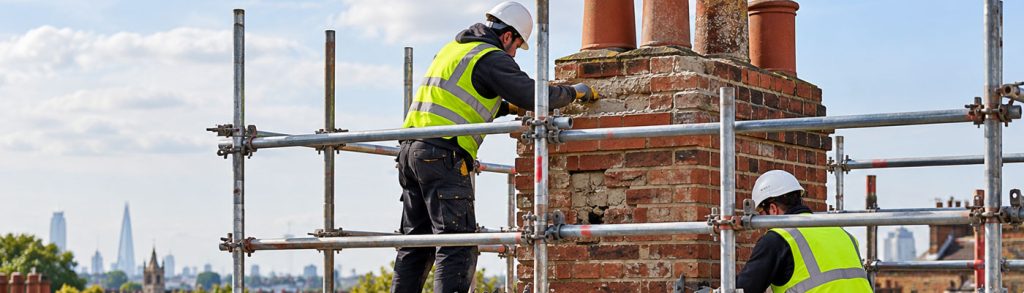
How Long Does Chimney Repair Scaffolding Take?
Chimney repairs can look like a small job from the ground, but reaching the chimney safely is a different matter. Repointing brickwork, replacing damaged mortar, fixing flashing, repairing a chimney pot or carrying out masonry work all require safe access. This is where chimney repair scaffolding comes in.
So, how long does chimney repair scaffolding take? For many homes, the actual erection may take several hours, although the time varies with the height and shape of the property, access around the building, the size of the scaffold and the work being carried out. The scaffold may then stay in place for several days or longer while the chimney repairs are completed.
Knowing what affects the timescale makes it easier to plan your repair, arrange trades and avoid delays. It also helps to understand why chimney scaffolding should be planned around the job rather than treated as a standard setup.
How Long Does Chimney Repair Scaffolding Take to Erect?
There is no single time for every chimney scaffold. A straightforward home with good access may be erected within part of a day. A taller house, awkward roofline or property with limited access may take longer because the scaffolders need to create safe access around the building.
The chimney position is one of the main factors. A chimney close to the edge of a simple roof may be easier to reach than one positioned in the centre of a large or steep roof. The number of storeys also matters.
The shape of the property can affect the work too. Victorian terraces, semi-detached homes, extensions and properties with unusual roof layouts may need different scaffold arrangements. Conservatories, garages, extensions, trees, narrow passages and neighbouring structures can also affect access.
The type of repair is another consideration. A roofer or builder may need a working platform around the chimney, roof-level access, space for tools and materials, or extra protection around the work area. More extensive masonry repairs may need a larger working platform.
For this reason, it is better to think of chimney scaffolding as a planned site setup rather than a fixed number of hours. A site assessment gives the scaffolding team a clearer idea of what is needed and helps avoid surprises once work begins.
How Long Does Chimney Scaffolding Stay Up?
The scaffold normally remains in place for as long as the repair team needs safe access to the chimney. This could be a few days for a simple repair, or longer if the work involves extensive repointing, masonry replacement, structural repairs or related roof work.
The hire period should match the repair programme. If the roofer or builder needs extra time, removing the scaffold too early can create another access problem. On the other hand, leaving it standing after the work has finished may add unnecessary hire time.
Chimney repairs can also uncover problems that were not obvious from ground level. Once old mortar, damaged bricks or flashing are inspected closely, the repair may become larger than first expected. This is one reason to discuss the likely hire period with both the repair contractor and scaffolding company before the scaffold goes up.
At JAX Scaffolding, chimney work is included within its residential scaffolding services, alongside roof and gutter work, loft conversions, painting and decorating. The company works across London and nearby areas and focuses on safe access for domestic projects. Its website also explains that each scaffold is planned around the property and job rather than using a one-size-fits-all setup.
What Can Make Chimney Repair Scaffolding Take Longer?
Restricted access is one of the most common reasons installation can take longer. If equipment has to pass through a narrow side passage, around an extension or through part of the property, the work may need more planning and care.
The height and design of the building can also make a difference. Higher chimneys require more scaffold structure, while complex roof shapes may need additional sections to create safe access. Conservatories, balconies, sloping ground and neighbouring buildings can also affect the setup.
Public access is another consideration. If scaffolding needs to extend over a pavement or onto a public area, permission from the relevant local authority may be required. This can add time because the permit process needs to be dealt with before installation in the affected area. Where scaffolding stays entirely on private property, the situation may be different, but local requirements should still be checked.
Coordination matters too. Chimney scaffolding may be ready, but the repair contractor may not be available on the planned date. If scaffolding is removed before the repair is fully completed, another visit may be needed. Keeping the scaffolder and repair contractor informed of the programme can help avoid this.
JAX Scaffolding offers flexible hire periods and extension options for residential work, which can be useful when roofing or chimney work takes longer than expected. The hire period should still be reviewed according to the work and the condition of the scaffold.
Does Chimney Repair Always Need Full Scaffolding?
Not every chimney job needs the same access system. The right arrangement depends on the height, location, type of work and site conditions. In some situations, a scaffold tower or more focused access structure may be suitable. More involved repairs may need a larger scaffold that connects with roof-level access.
A professional scaffolder can assess the property and discuss the access needed with the contractor carrying out the repair. This is especially useful for older homes, difficult roof layouts and projects where chimney repairs are being completed alongside roofing or gutter work.
What Happens After the Chimney Repair?
Once the repair contractor confirms that the chimney work is finished and no further access is needed, the scaffolding can be dismantled. Removal should be planned so it does not interfere with final checks, roof work or related repairs.
At JAX Scaffolding, residential scaffolding covers installation, dismantling and removal. The company also highlights clean and efficient work around homes. This matters because chimney scaffolding often sits close to roofs, gutters, windows, gardens and neighbouring properties.
In practical terms, the best time to remove chimney scaffolding is when the repair team has finished all work that requires it and confirmed that no further access is needed. Agreeing this before the project starts can help prevent unnecessary delays and extra hire time.
FAQ
How long does it take to put scaffolding up for a chimney repair?
A straightforward domestic chimney scaffold may be erected within several hours, but there is no fixed time for every property. Height, roof design, access, chimney position and scaffold size all affect the installation.
How long does scaffolding need to stay up for chimney repairs?
It may stay up for a few days or several weeks, depending on the repair. Simple work can be completed quickly, while extensive repointing, brick replacement or structural repairs may take longer.
Can chimney scaffolding be put up in one day?
Yes, many straightforward residential scaffold installations can be completed in a day. However, the exact timescale depends on the property and access required. A site assessment is the best way to establish a realistic plan.
Do I need scaffolding to repair a chimney?
Many chimney repairs require safe access at roof level, but the exact scaffold arrangement depends on the job. A professional assessment can establish whether full scaffolding, a tower or another access system is appropriate.
Does scaffolding need permission for chimney repairs?
If the scaffold needs to occupy or overhang a public pavement or road, permission may be required from the local authority. Requirements vary by location, so this should be checked before installation.