
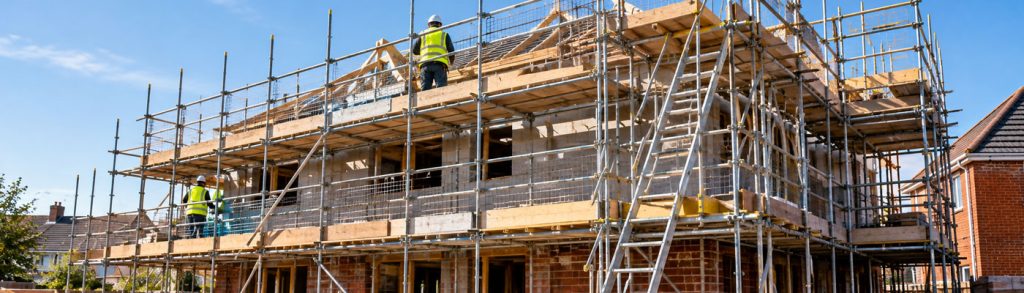
How Does Scaffolding Make Building Work Safer?
This is where scaffolding safety matters. A properly planned and erected scaffold gives workers a stable place to stand, safer routes to move around and protection from falls.
Scaffolding does not remove every risk on a building site, and it must be used correctly. Its value comes from creating a safer working environment when it is designed, erected, inspected and used by competent people. Understanding how scaffolding supports safer work at height can make project planning much easier.
How Does Scaffolding Improve Safety on Building Sites?
One of the main benefits of scaffolding is that it provides a stable working platform. A ladder is useful for some short tasks, but it gives limited space for standing, moving and handling equipment. Workers may need to climb down repeatedly or stretch sideways to reach a work area. A properly installed scaffold provides a platform designed for the job, allowing work to be carried out with better balance and access.
Scaffolding can also provide collective fall protection. Guardrails and toe boards help reduce the chance of a person falling from an exposed edge, while the platform gives workers a defined area in which to work. The Health and Safety Executive explains that work at height should be properly planned and that suitable work equipment, including scaffolds, can be used to prevent falls. Falls from height remain a major cause of serious injury in construction, so controlling the risk before work begins is essential.
Another benefit is easier access to the full work area. When a scaffold is positioned around a property, roofers, painters, decorators and other trades can reach sections of a building without constantly repositioning ladders. This can reduce awkward movements and help workers keep both hands available for tasks when the platform and access arrangements allow it. For roof repairs, gutter work, rendering, brickwork and loft conversions, this can make a real difference to how safely the job is carried out.
A scaffold can also help protect people on the ground. Toe boards, properly managed platforms and controlled access can reduce the risk of tools or materials falling from working levels. However, the scaffold is only one part of site safety. Materials still need to be stored correctly, platforms need to be kept clear and people below should be kept away from areas where falling objects could cause harm.
What Makes Scaffolding Safe to Use?
Scaffolding safety starts before anyone climbs onto the platform. The structure needs to suit the building, the work being carried out, expected loads and conditions around the property. Ground conditions, access points, nearby structures and overhead hazards all need to be considered. On residential projects, narrow side passages, gardens, driveways and neighbouring properties may affect how the scaffold can be erected and accessed.
The way the scaffold is erected is just as important as the materials used. The HSE states that scaffolds should be designed, erected, altered and dismantled by competent people and under the direction of a competent supervisor. This helps ensure components are fitted correctly and changes are not made casually during a project. Removing a guardrail, moving a component or changing the arrangement without proper assessment can affect the stability and protection provided by the scaffold.
Inspection is another key part of scaffolding safety. In the UK, scaffolding used for construction should be inspected before first use and at least every seven days. It should also be checked after events that could affect its condition, such as adverse weather, or after substantial alteration. Inspections must be carried out by a competent person and the findings should be recorded.
Weather deserves particular attention because scaffolding is exposed to changing outdoor conditions. Strong winds, heavy rain and other conditions can affect work at height. A scaffold should not simply be treated as safe because it was safe when first installed. If conditions change or the structure is altered, another inspection may be needed. Workers should also follow site instructions and avoid using scaffolding when conditions make the work unsafe.
Good housekeeping matters too. Platforms should not become crowded with unused materials, loose tools or waste. Clear access reduces trip hazards and makes movement easier. The scaffold should also be used only for the loads and purposes it has been designed to support. If more materials are needed, suitable arrangements should be discussed rather than placing extra weight on the platform.
When Is Scaffolding Especially Useful?
Scaffolding can be useful for far more than large construction projects. Homeowners may need it for roof repairs, chimney work, gutter replacement, exterior painting, rendering, brick cleaning, maintenance or a loft conversion. Even smaller jobs can involve repeated work at height, and a proper platform may provide safer access than relying on ladders for extended periods.
For roofing work, scaffolding can provide access around roof edges and give tradespeople a more controlled working position. For exterior decorating, it can allow painters to work across larger areas without repeatedly climbing up and down. During a loft conversion or extension, the scaffold may be needed for several stages of the project, from initial work through to finishing.
For homeowners, access around the property also needs attention. A scaffold should not block doors, windows or essential routes without proper planning. Where a scaffold needs to extend over a pavement or road, local authority requirements may apply. JAX Scaffolding explains that scaffolding kept entirely on private property will usually not need a permit, while structures extending onto public roads or pavements may require a council application.
How Can You Make Sure Your Scaffolding Is Safe?
Choosing scaffolding should start with the work itself, rather than simply choosing the cheapest or quickest option. Consider what trades will use the scaffold, how high they need to work, how long the project is expected to last and whether materials need to be moved from the platform. These details help determine what access arrangement is suitable.
It is also worth checking who will erect the scaffold and how inspections will be managed during the hire period. A competent scaffolding team should be able to look at the property, identify access issues and explain how the proposed arrangement supports the work. JAX Scaffolding describes a process that includes visiting the property, measuring the area, identifying access issues, providing a clear quote and installing the scaffold before staying available during the project.
The most important point is that scaffolding is a safety measure, not a guarantee of safety. Workers still need suitable training, safe work methods and sensible site controls. Ladders, tools, materials, weather and access routes all need to be managed alongside the scaffold. When these parts are considered together, scaffolding can provide a safer foundation for work at height.